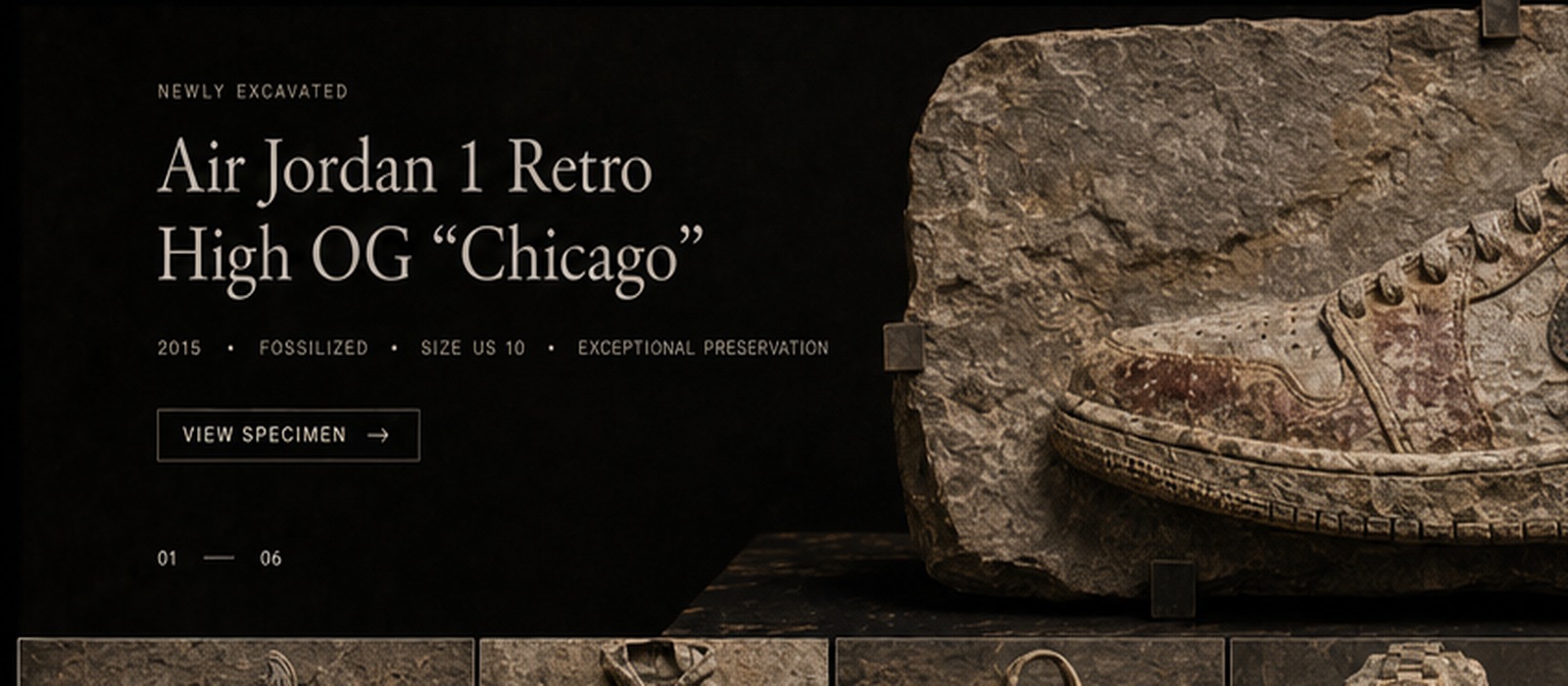
GLOBAL ARCHIVE OF CULTURAL OBJECTS · FIELD RECOVERY · MATERIAL HISTORY · SNEAKER ARCHAEOLOGY
DEADSTOCK BONEYARD FIELD INSTITUTE
Sneaker archaeology
with dirt under its nails.
Part field station, part preparation lab, part obsessive sneaker archive. We read a buried object twice: first as a fossil specimen, then as a piece of design culture with a brand, silhouette, colorway, release history and life before the ground.
 INSTITUTIONAL MARK · SPECIMEN STATE
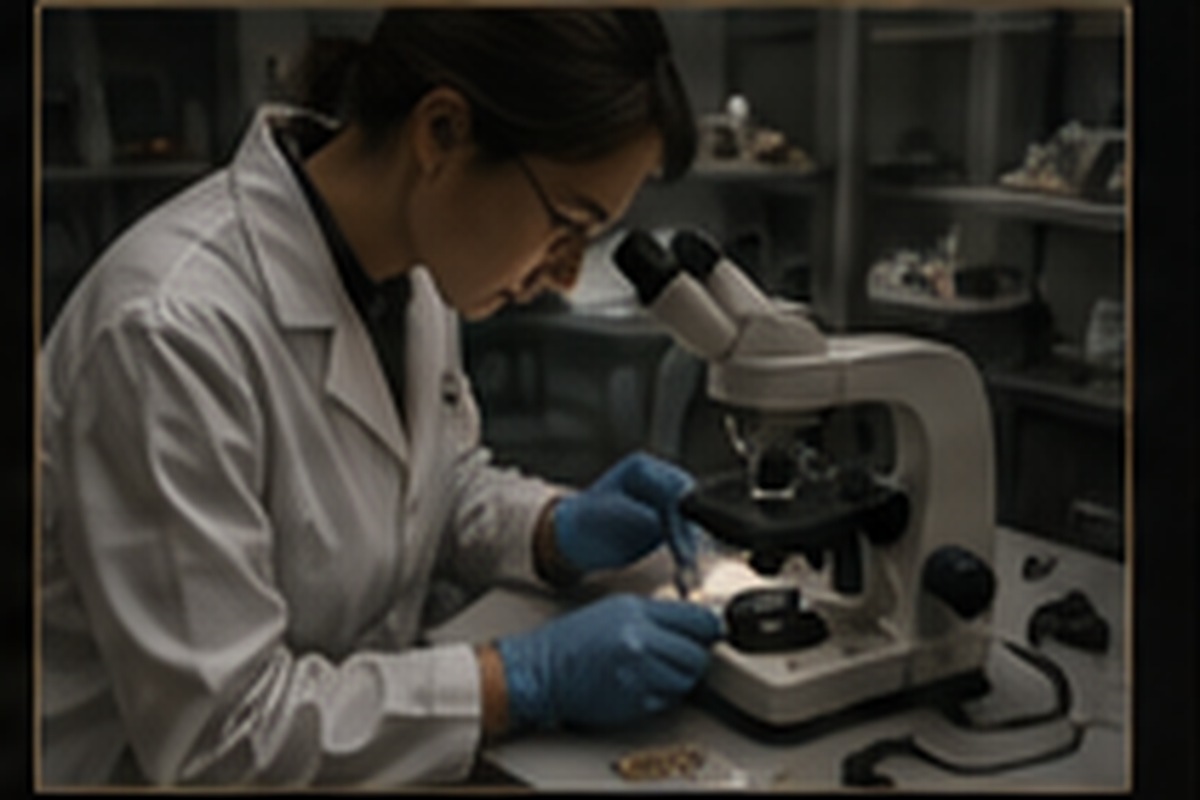
PREPARATION LABORATORY
THE DISCIPLINE
We care about the strata and the SKU.
A paleontologist asks where a specimen was found, what surrounded it, how it was preserved and which features survive. A sneakerhead asks what silhouette it is, which colorway, which release, which materials, which box, which collaboration and why that pair mattered.
Deadstock Boneyard treats those questions as one evidence set. Outsole geometry can be diagnostic morphology. A tongue tag can act like a field character. A retro can belong to a lineage. A cracked midsole records post-release history. The original product identity is never erased by fossilization.
CONTEXT BEFORE CLEANING. IDENTITY BEFORE HYPE. RECORD BEFORE SALE.
64ACTIVE SPECIMEN RECORDS
40MAKERS REPRESENTED
1980–CULTURAL STRATIGRAPHY
01UNBROKEN RECORD PER OBJECT
FIELD PROGRAM
Excavation starts before the shovel.
The goal is not to pull a cool object from the ground. The goal is to recover the object with enough context left intact that its story can still be reconstructed later.
01Survey the exposure
We log surface material, sediment, orientation and associated debris before disturbing the site. A loose lace tip ten centimeters away may be meaningless—or the clue that completes the specimen.
02Photograph and map in situ
Position, scale, orientation and surrounding matrix are recorded first. Field notes stay attached to the specimen number from this point forward.
03Excavate for information
Matrix is removed only as aggressively as preservation allows. Fragile or articulated material is lifted with surrounding material rather than “cleaned” for a better field photo.
04Stabilize and jacket
Weak surfaces are supported, fragments are bagged and indexed, and larger blocks are protected for transport. The laboratory gets a stable problem, not a bag of mysteries.
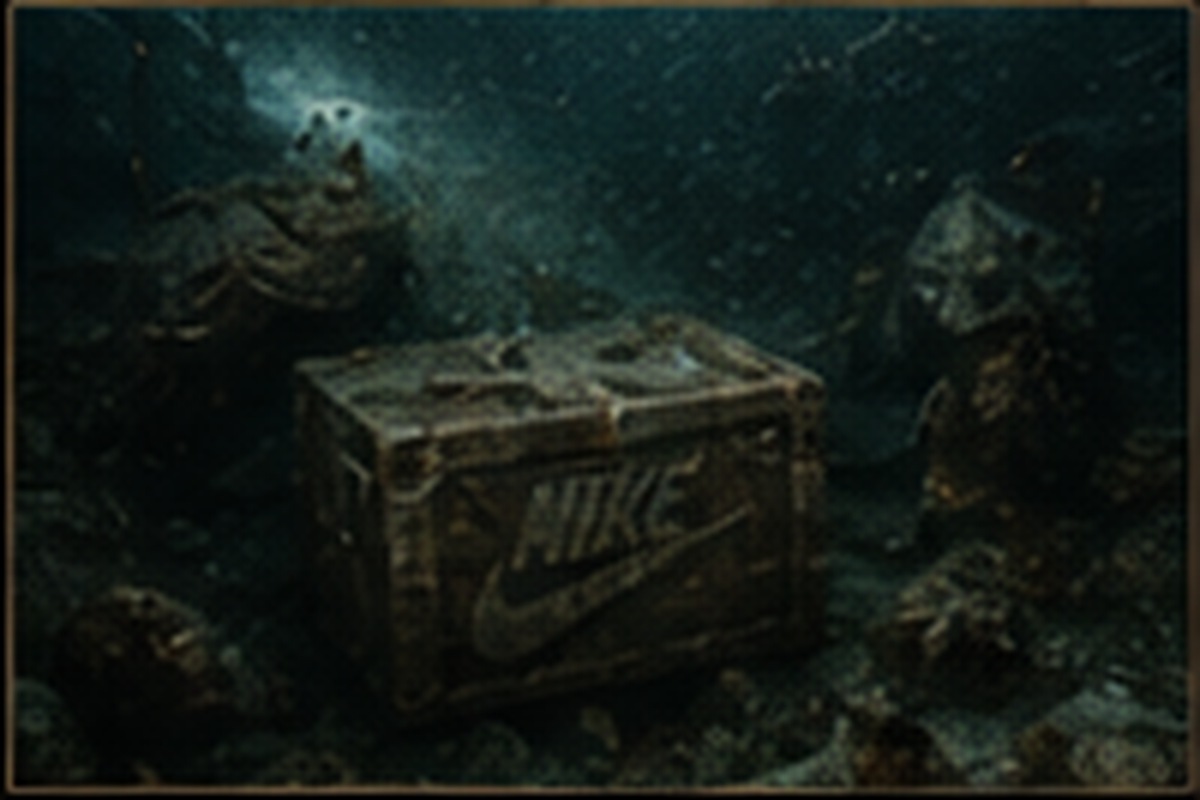
FIELD NOTE 24-07 · COASTAL FACIES
Coastal Trench
Salt-loaded sediment, compressed retail debris and fragmented late-20th-century objects. Excellent impressions; aggressive surface loss.
- FIELD PRIORITY
- Textile impressions + outsole traces
- RECOVERY MODE
- Block lift / partial matrix retention

FIELD NOTE 25-02 · ARID BASIN
Gobi Dry Basin
Dry, mineral-rich matrix produces sharp edges and strong three-dimensional preservation. Fine dust can obscure logos while protecting panel relief.
- FIELD PRIORITY
- Complete silhouettes + hardware
- RECOVERY MODE
- Pedestal excavation / jacketed lift

FIELD NOTE 26-01 · GLACIAL DEBRIS
Alpine Ridge
Compression, freeze-thaw fractures and displaced components create difficult associations. Tread fragments often survive better than uppers.
- FIELD PRIORITY
- Association mapping + fragment matching
- RECOVERY MODE
- Grid excavation / numbered fragments
RESEARCH DEPARTMENT
Identification is only the first sentence.
Once the object is exposed, we build its cultural record: what it was, which version, when it appeared, who designed or collaborated on it, how it circulated and why collectors still care.
Every record asks five questions.
- WHAT IS IT? Brand, model, colorway, category and product lineage.
- WHICH ONE? Release year, variant, retro generation, region and diagnostic construction details.
- WHERE DID IT SIT IN CULTURE? Performance origin, skate scene, runway, music, celebrity, collaboration, subculture or mass adoption.
- WHAT SURVIVED? Original materials, pigment, hardware, labels, box-associated material and wear traces.
- WHAT CAN WE PROVE? Every assertion is separated from inference, folklore and institutional fiction.
CASE STUDY · LINEAGEAir Jordan 1
A single “Chicago” specimen belongs to a much larger lineage: the 1985 design, later retros, changes in shape and branding, and the cultural mythology that made the silhouette a reference point for generations of collectors.
CASE STUDY · COLLABORATION STRATANike SB / Supreme
Early-2000s SB collaborations are read as markers of a specific skate-and-streetwear layer: limited distribution, distinct materials, memorable release behavior and a long afterlife in collector culture.
CASE STUDY · ARCHIVE REVIVALTechnical runners
When older performance shapes return as lifestyle objects, the archive records both lives—the original engineering context and the later fashion context that made the silhouette newly legible.
CATALOGUING STANDARD
No anonymous fossils.
Deadstock Boneyard does not invent replacement names for recognizable products. A Nike remains a Nike. A Miu Miu x New Balance remains that collaboration. Fossilization describes condition—not identity.
SPECIMEN NUMBERDBY-15-0421
OBJECTAir Jordan 1 Retro High OG “Chicago”
MAKERJordan / Nike
RELEASE HORIZON2015 RETRO · 1985 LINEAGE
FIELD CONTEXTLOCALITY + ORIENTATION + MATRIX + ASSOCIATED MATERIAL
PRESERVATIONMORPHOLOGY + PIGMENT + CONSTRUCTION FEATURES
INSTITUTIONAL POSITION
We are not interested in turning sneakers into anonymous rocks. We are interested in what survives when the hype is gone.
The archive keeps design history, collector knowledge and field context in the same record. That is the whole point of the Boneyard.